
Business energy for takeaways at a glance
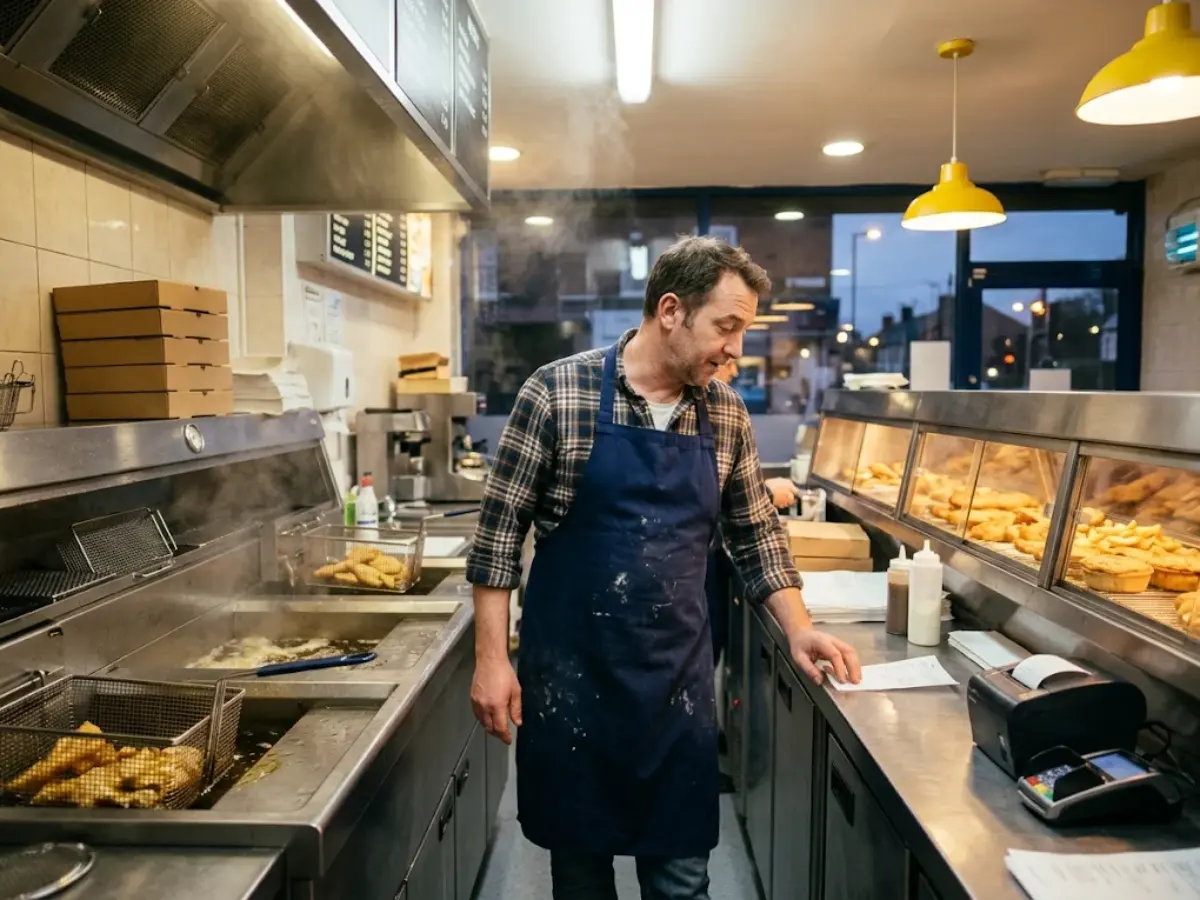
- Biggest users: fryers, ovens, grills, extraction and refrigeration.
- Busiest times: evenings and weekends, with a big peak on Friday and Saturday nights.
- Two contracts to watch: most takeaways use both gas and electricity.
- No price cap: your price is set when you sign, so timing your renewal matters.
- Safety first: commercial gas appliances need a Gas Safe registered engineer.
- Key detail: your contract end date. Compare 6 to 12 months before it.
What uses the most energy in a takeaway?
| Equipment | Why it costs | How to cut the cost |
|---|---|---|
| Fryers | Large volumes of oil kept hot for hours | Switch on in stages, use lids during quiet spells, filter and top up oil |
| Ovens and grills | High heat for long periods | Preheat only when needed, keep doors closed, batch cook |
| Extraction | Fans running all evening | Run only when cooking, clean filters regularly |
| Fridges and freezers | Running 24 hours a day | Clean condenser coils, check door seals, do not overfill |
| Hot water | Washing up and cleaning | Fix dripping taps, insulate pipes and cylinder |
| Lighting and signs | Long opening hours | LED lighting, timers on signs |
When do takeaway energy bills peak?
Most takeaways do most of their trade between early evening and late night, especially on Fridays and Saturdays. Fryers and ovens are often switched on well before the first order and left on long after the last one. Matching equipment to the real busy times is one of the simplest ways to cut use without changing your menu.
How to get a cheaper energy deal for your takeaway
- Find your contract end dates for gas and electricity. They are often different.
- Check your annual usage in kWh on each bill.
- Compare suppliers early, ideally 6 to 12 months before each end date.
- Compare total annual cost, unit rate and standing charge together.
- Consider aligning both contracts so they end on the same date next time.
- Fix your price so a cold winter or a market rise does not catch you out.
Money saving tips for takeaways
- Stage your start up. Turn on one fryer for early orders and the rest as it gets busy.
- Keep oil in good condition. Clean, topped up oil heats more efficiently.
- Service your kitchen. Book regular checks with a Gas Safe registered engineer for gas appliances.
- Look after your fridges. Dirty coils and worn seals make compressors work harder all night.
- Read meters at closing and opening. A big overnight figure means something is left on.
- Watch the Climate Change Levy and VAT lines on your bill. Our guide to VAT on business energy explains them.
What protections do takeaways have?
Many takeaways are microbusinesses, which gives you extra protections on renewals and rollovers. Since 2024, small businesses can also take unresolved complaints to the Energy Ombudsman. If your fixed deal has ended, read how to avoid out of contract business energy rates.
See how business gas and business electricity deals work, or read our guide to small business energy.
Get a free takeaway energy quote
Tell us when your contract ends using the form above. A trusted UK broker will compare gas and electricity suppliers for your takeaway, free and with no obligation.