Business energy for cafés at a glance
- Biggest users: espresso machines, water boilers, fridges, dishwashers and ovens.
- Busiest times: breakfast and lunch, with machines often hot from opening to close.
- No price cap: your business contract sets your price.
- Easy win: timers on the coffee machine, water boiler and display fridges.
- VAT: usually 20%, reclaimable if you are VAT registered.
- Key detail: your contract end date. Compare 6 to 12 months before it.
What uses the most energy in a café?
| Equipment | Why it costs | How to cut the cost |
|---|---|---|
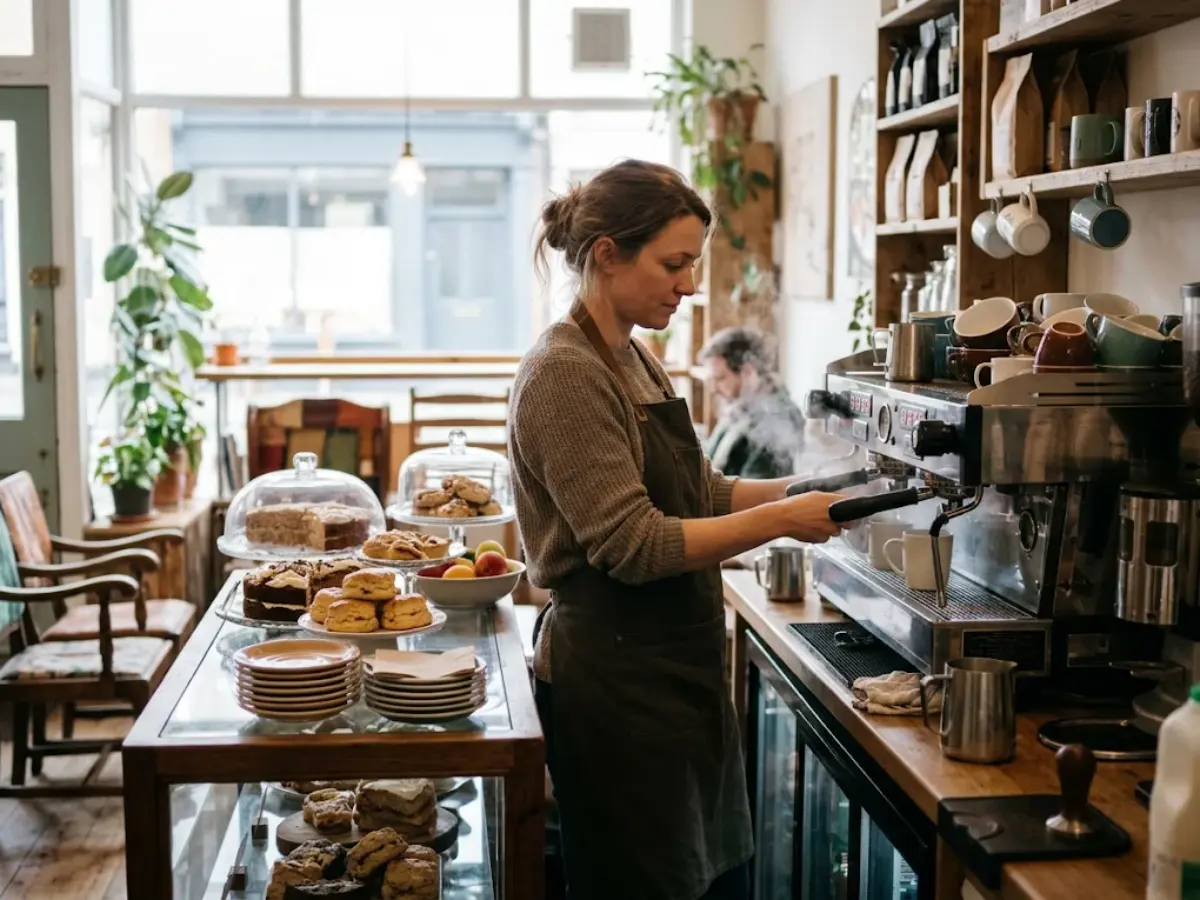
| Espresso machine | Boiler kept hot all day and often all night | Timer or eco mode, descale regularly |
| Hot water boiler | Constant hot water for tea and washing up | Timer, right size for your trade |
| Display fridges and chillers | Running 24 hours a day | Night blinds, clean coils, check seals |
| Dishwasher | Many cycles a day | Run full loads, use the right programme |
| Ovens, grills and panini presses | High heat at peak times | Switch on when needed, not at opening |
| Lighting and heating | Long opening hours | LED lamps, thermostat and timers |
When do café energy bills peak?
Most cafés are busiest from breakfast to mid afternoon, with weekends often the biggest days. The machines that make cafés expensive to run are the ones that stay hot between rushes. If your coffee machine, water boiler and fridges run around the clock, a large share of your bill can be used while the shop is closed.
How to get a better energy deal for your café
- Find your contract end date on your bill or online account.
- Check your usage for electricity and, if you have it, gas.
- Compare suppliers 6 to 12 months before your end date.
- Compare the total cost, not just the unit rate.
- Fix your price for one to three years to keep your margins predictable.
- Diary your next renewal so you never end up on default rates.
Money saving tips for cafés
- Put the espresso machine on a timer so it heats up shortly before opening.
- Fit night blinds to open fronted chillers and switch off display lighting after closing.
- Run the dishwasher only when full and keep the filters clean.
- Service your machines. Scale build up makes boilers work harder.
- Read your meter at closing and again at opening to see what runs overnight.
- Check your bill for estimated readings, the right VAT and the right unit rate.
What protections do cafés have?
Most independent cafés are microbusinesses under Ofgem rules, with protections on renewals and rollovers. Micro and small businesses can take unresolved complaints to the Energy Ombudsman. The VAT rules are in HMRC VAT Notice 701/19.
Read our guide to small business energy, compare business electricity prices, check your business water costs and learn what the lines on your business utility bill mean.
Get a free café energy quote
Tell us when your contract ends using the form above. A trusted UK broker will compare suppliers for your café, free and with no obligation.