
Energy for cleaning businesses

Business energy for cleaning companies

Free cleaning company energy quote
Question 1 of 6
Question 1 of 6

What do you need a quote for?

Question 2 of 6
Question 2 of 6

When does your contract end?

This is the most useful detail for finding you a better rate.

Question 3 of 6
Question 3 of 6

About your business

Question 4 of 6
Question 4 of 6

What do you pay now?

A rough figure is fine.

Question 5 of 6
Question 5 of 6

Who should the broker ask for?

Question 6 of 6
Question 6 of 6

Where should we send your quote?

Free, secure and no obligation

Whether you run a small office, a storage unit or an in house laundry, energy is a cost every cleaning company can control. Here is how to understand your bills and find a better deal.

Quick answer: Cleaning companies pay business energy rates on their office, unit or laundry, with no price cap. Laundry equipment, hot water, heating and charging equipment usually use the most. Compare suppliers 6 to 12 months before your contract ends and fix your price, then cut waste with timers and well maintained machines.

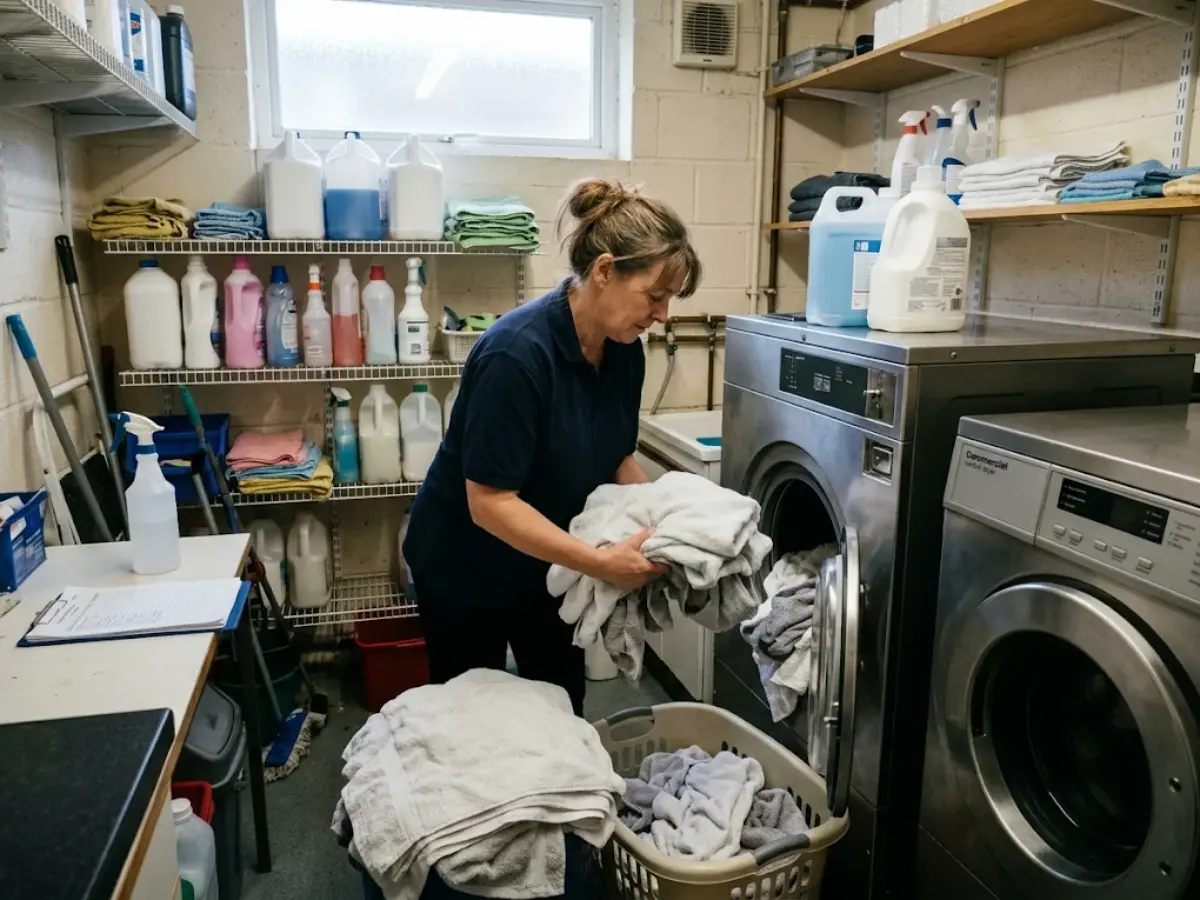
Cleaning company owner loading towels into a washing machine in her laundry room

Business energy for cleaning companies at a glance

  • Where you use it: your office, storage unit or in house laundry.
  • Biggest users: washing machines, tumble dryers, hot water, heating and charging equipment.
  • No price cap: business prices are set in your contract.
  • Low users: small offices and units may qualify for 5% VAT.
  • Working from home? You normally stay on your household tariff.
  • Key detail: your contract end date. Compare 6 to 12 months before it.

Where does a cleaning company use energy?

Area What uses energy How to cut the cost
Laundry Washing machines and tumble dryers Full loads, lower temperatures, clean filters
Office Heating, lighting and computers Thermostat, LED lighting, switch off at night
Store or unit Lighting and charging floor machines Charge on timers, switch off lights
Hot water Filling buckets and machines Insulate cylinders and pipes, use timers
Vans and EV chargers Charging electric vans at the unit Charge overnight on a suitable tariff

When do cleaning company bills peak?

Many cleaning companies work early mornings, evenings and weekends, so energy use at the office or unit often happens outside normal hours. Laundries can run from first thing in the morning until late. Knowing when you use energy helps you choose between a standard fixed tariff and one with cheaper off peak rates.

How to get a better energy deal for your cleaning company

  1. List every site with a meter: office, unit and laundry.
  2. Find each contract end date and diary it.
  3. Check your usage in kWh on recent bills.
  4. Compare suppliers 6 to 12 months before each end date.
  5. Ask about off peak or time of use options if you run laundry or charge vans overnight.
  6. Fix your price and make sure each new deal starts the day after the old one ends.

Money saving tips for cleaning companies

  • Wash full loads at lower temperatures where the job allows.
  • Clean dryer filters after every load so dryers run shorter cycles.
  • Charge floor machines and vacuums on timers, not all night.
  • Switch to LED lighting in the office and unit.
  • Read your meters monthly to avoid estimated bills.
  • Check your VAT rate if your office or unit uses very little.

What protections do cleaning companies have?

Most cleaning companies are micro or small businesses under Ofgem rules, with free access to the Energy Ombudsman if a complaint is not resolved within eight weeks.

Read our guides to small business energy, half hourly meters, business energy audits and VAT on business energy.

Get a free cleaning company energy quote

Tell us when your contract ends using the form above. A trusted UK broker will compare suppliers for your office, unit or laundry, free and with no obligation.

Business energy for cleaning companies FAQs

Do cleaning companies need business energy?

If you have an office, unit or laundry used for your business, it will be on a business energy contract. If you run the company from home, you normally stay on your household tariff, as the property is mainly used as a home.

What uses the most energy in a cleaning business?

For companies with their own laundry, washing machines and tumble dryers are usually the biggest users. For office based companies, heating, hot water, lighting and charging equipment such as floor machines and vacuums make up most of the bill.

Can a small cleaning company pay 5% VAT on energy?

Yes, if the premises use no more than 33 kWh of electricity or 145 kWh of gas a day on average. A small office or storage unit often falls under these limits, so check the VAT line on your bill.

How can a cleaning company cut laundry energy costs?

Wash full loads at the lowest temperature that does the job, keep machines and dryer filters clean, spin well before drying and service equipment regularly. Running dryers at off peak times can also help if you are on a time of use tariff.

Is there a price cap on business energy?

No. The Ofgem price cap only covers household energy. Business prices are agreed in your contract, so comparing before you renew is the best way to keep costs down.

When should a cleaning company renew its energy contract?

Start comparing 6 to 12 months before your contract end date, so you can fix a good price and avoid out of contract rates.

Ready to compare business energy prices?

Tell us when your contract ends and get a free, no obligation quote from a trusted UK broker.

Get a free quote